For Ukrainian citizens
The CUKR residence card and Polish: no exam now, B1 on the way to permanent status
The CUKR card gives Ukrainian citizens with UKR status a three-year temporary residence permit without any language requirement. What makes it important for your Polish is the next step: the time on the card counts towards the five years needed for the EU long-term resident permit, and that permit requires Polish at B1. Here is what the acts and the offices say.
Facts checked:
- 3 yearsvalidity of the CUKR card (art. 42p)
- 4 March 2027last day to apply for the card (art. 42x)
- 5 yearsof legal, uninterrupted stay for the EU resident permit
- B1Polish required for the EU resident permit and for citizenship
The card
What the CUKR card is
The card is described in art. 42c–42x of the Act on assistance to citizens of Ukraine (consolidated text Dz.U. 2026 item 1293). Applications have been possible since 4 May 2026. Under art. 42c you can get it if you had UKR status on 4 June 2025, have it on the day you apply and have held it without a break for at least 365 days.
You apply online only, in the system run by the Office for Foreigners (art. 42f), and the voivode has 180 days to issue the card or refuse (art. 42l). The card is valid for three years from the day it is issued (art. 42p). If you apply by 4 March 2027, your stay is treated as legal until you collect the card or the decision becomes final (art. 42x).
On the day you collect the card, your temporary protection becomes a temporary residence permit valid until the card expires (art. 42r). You do not need a work permit (art. 42v) and you can run a business on the same terms as Polish citizens (art. 42w). Voivodeship offices point out the other side: when you collect the card, your UKR status ends, together with the benefits tied to it.
There is no Polish language condition anywhere in art. 42c–42x. You do not need a certificate or an exam to get the CUKR card.
Five years
Does the time on the CUKR card count towards the EU resident permit?
Yes. The Office for Foreigners states that the period of stay in Poland on the CUKR card will count towards the period required for the EU long-term resident permit. The legal reason is art. 42r: from the day of collection you hold an ordinary temporary residence permit, and art. 212(2) of the Act on Foreigners does not list it among the periods that are left out.
The count starts on the day you collect the card. The Pomeranian Voivodeship Office puts it plainly in its questions and answers: the period begins when you collect the CUKR card, and the time you spent in Poland with UKR status is not counted. This is the position of the offices that decide these cases, so plan with it.
The card itself lasts three years and the permit needs five. After the card expires you need another temporary residence permit on general rules (for example for work), and the stay has to remain legal and uninterrupted. While you are still under temporary protection, an application for the EU resident permit is not even examined (art. 213(1)(1)(e)).
Applications opened on 4 May 2026, so nobody can complete five years counted from a CUKR card before 2031. Periods on other temporary residence permits count under the general rules of art. 212 – ask your voivodeship office how they apply to you.
The route
From the CUKR card to permanent status
Polish is not needed at the start. It becomes a condition exactly where the status becomes permanent.
CUKR card: no Polish required
Three years of temporary residence with the right to work. No certificate, no exam (art. 42c–42x).
Another temporary residence permit: no Polish required
When the card expires, you continue on a permit granted on general rules. The Act on Foreigners sets no language condition for temporary residence.
EU long-term resident permit: B1
After five years of legal, uninterrupted stay, with a stable income and health insurance, you can apply for a permit for an indefinite time. It requires confirmed Polish at least at B1 (art. 211(1)(3)). See which documents are accepted.
Citizenship: B1
Recognition as a Polish citizen is built on a permanent status such as the EU resident permit and also requires Polish at least at B1 (art. 30 of the Act on Polish Citizenship). See the citizenship requirement.
At a glance
What each status asks for
| Status | Polish required? | Counts towards the 5 years? | Source |
|---|---|---|---|
| Temporary protection (UKR status) | No | No – position of the offices | Pomeranian Voivodeship Office, questions and answers |
| CUKR card | No | Yes, from the day you collect the card | Art. 42r; Office for Foreigners |
| EU long-term resident permit | B1 | – | Act on Foreigners, art. 211 |
| Citizenship by recognition | B1 | – | Act on Polish Citizenship, art. 30 |
Sources: Act on assistance to citizens of Ukraine (Dz.U. 2026 item 1293), Act on Foreigners (Dz.U. 2025 item 1079), Office for Foreigners, Pomeranian Voivodeship Office. Status on 12 November 2026.
Looking ahead
Why think about B1 now, if you need it in a few years
The state certificate does not expire. A B1 certificate passed in 2027 is the same proof in 2031. You can take the exam when it suits you, instead of in the last months before your application, when a failed part would cost you a whole session.
Ukrainian speakers usually understand Polish quickly – and that is exactly why the exam surprises them. To pass B1 as an adult you need at least 50% in every part: listening, reading, grammar, writing and speaking. Understanding carries you through listening and reading. Grammar and writing ask for correct endings, spelling and the forms of a formal letter, and words that look familiar often mean something else.
Exam sessions are fixed – five a year – and you register at a centre about two months before. See exam dates and fees and how registration works.
Planned changes – drafts only
Government draft UD491 plans to change recognition as a Polish citizen, including B2 instead of B1. It is only a draft and not law. Today both the EU resident permit and citizenship require B1. We follow every official stage on the citizenship law changes tracker.
Not legal advice
This page summarises the acts and official statements listed below as of 12 November 2026. It is not legal advice, and PolishExam is not connected with any office. Whether you qualify for the card and which periods of your stay count is decided by the voivodeship office handling your case – ask them about your situation.
Prepare with PolishExam
Practise the parts that understanding alone does not pass
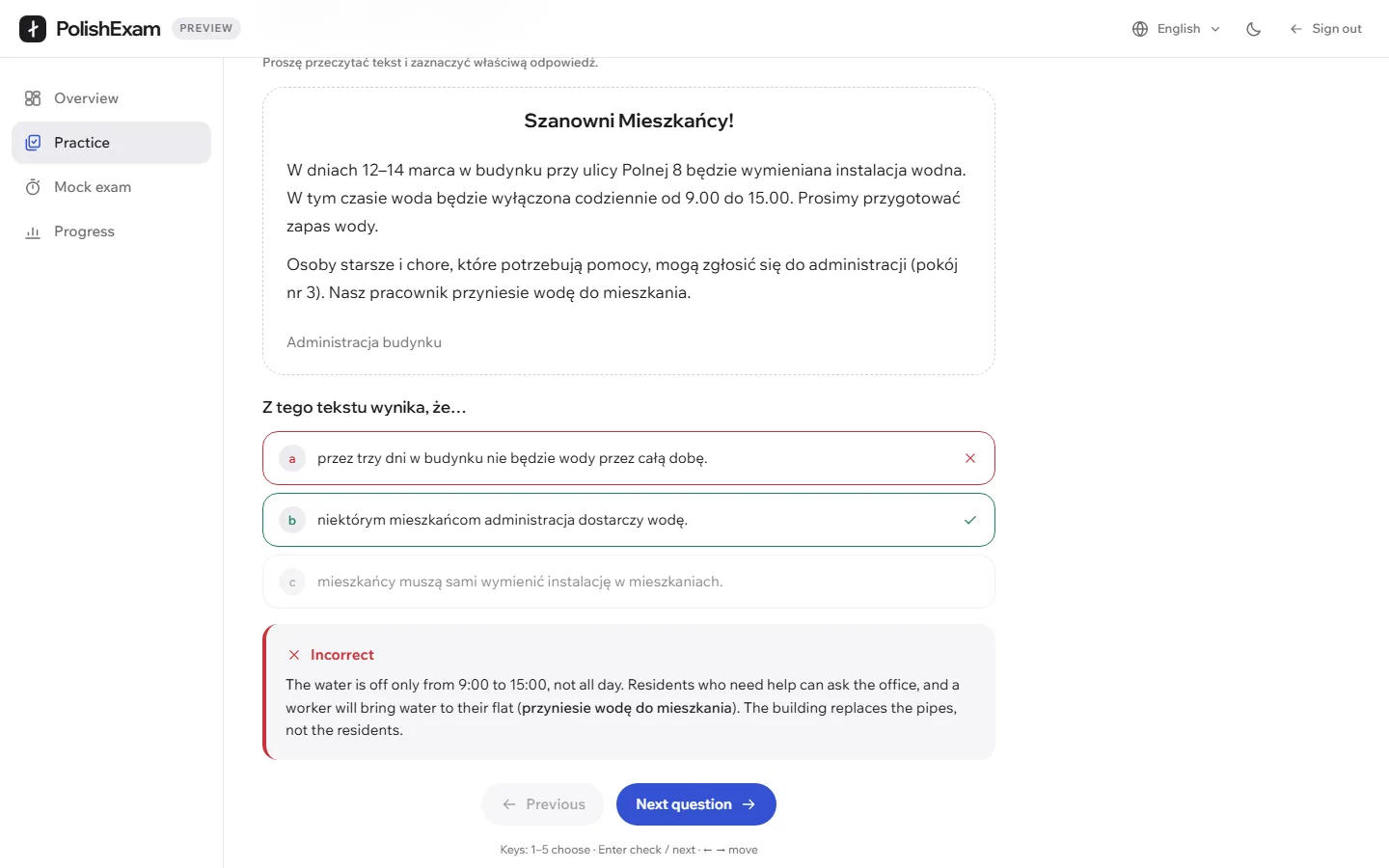
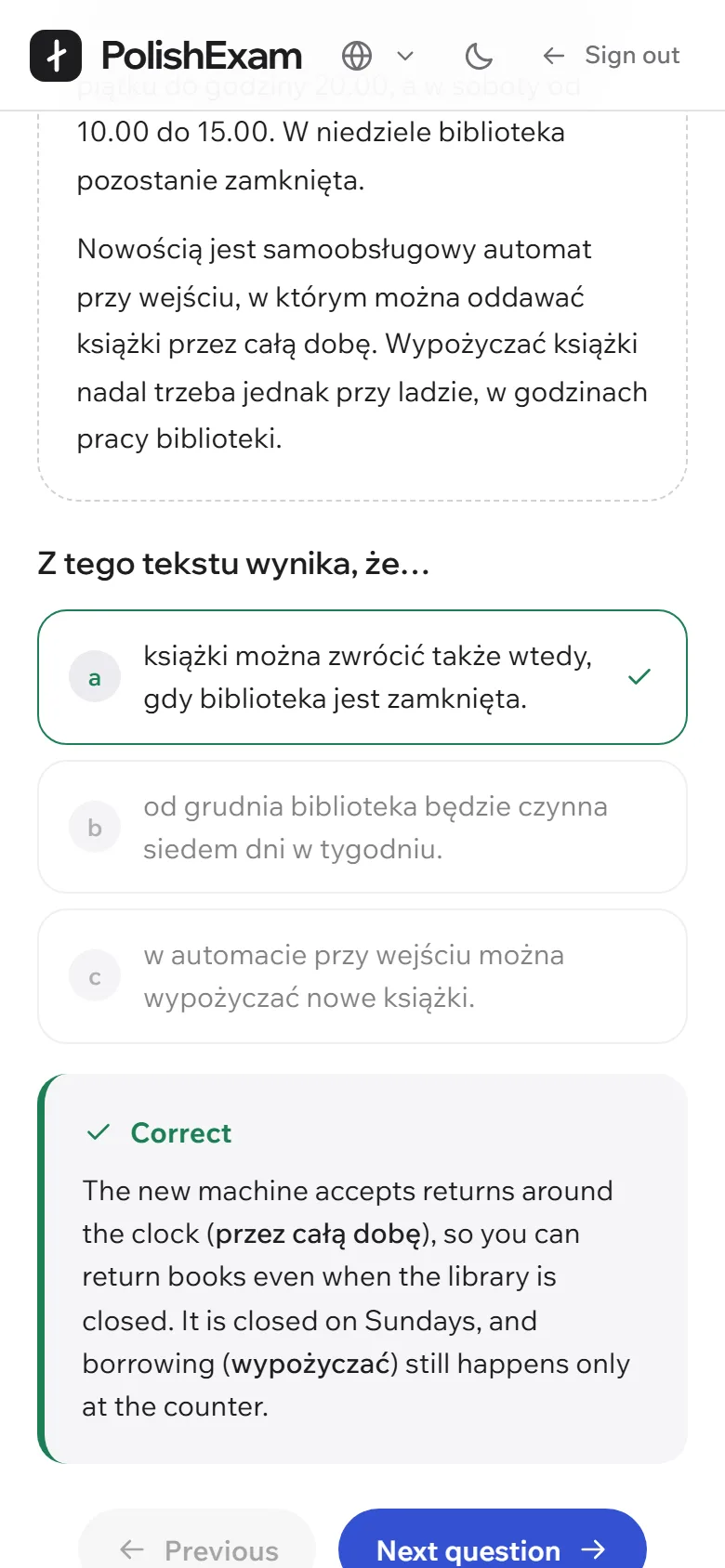
Grammar and reading with explanations
Tasks in the official B1 formats, in Polish. After each answer you see why it is right or wrong, explained in English or Ukrainian.
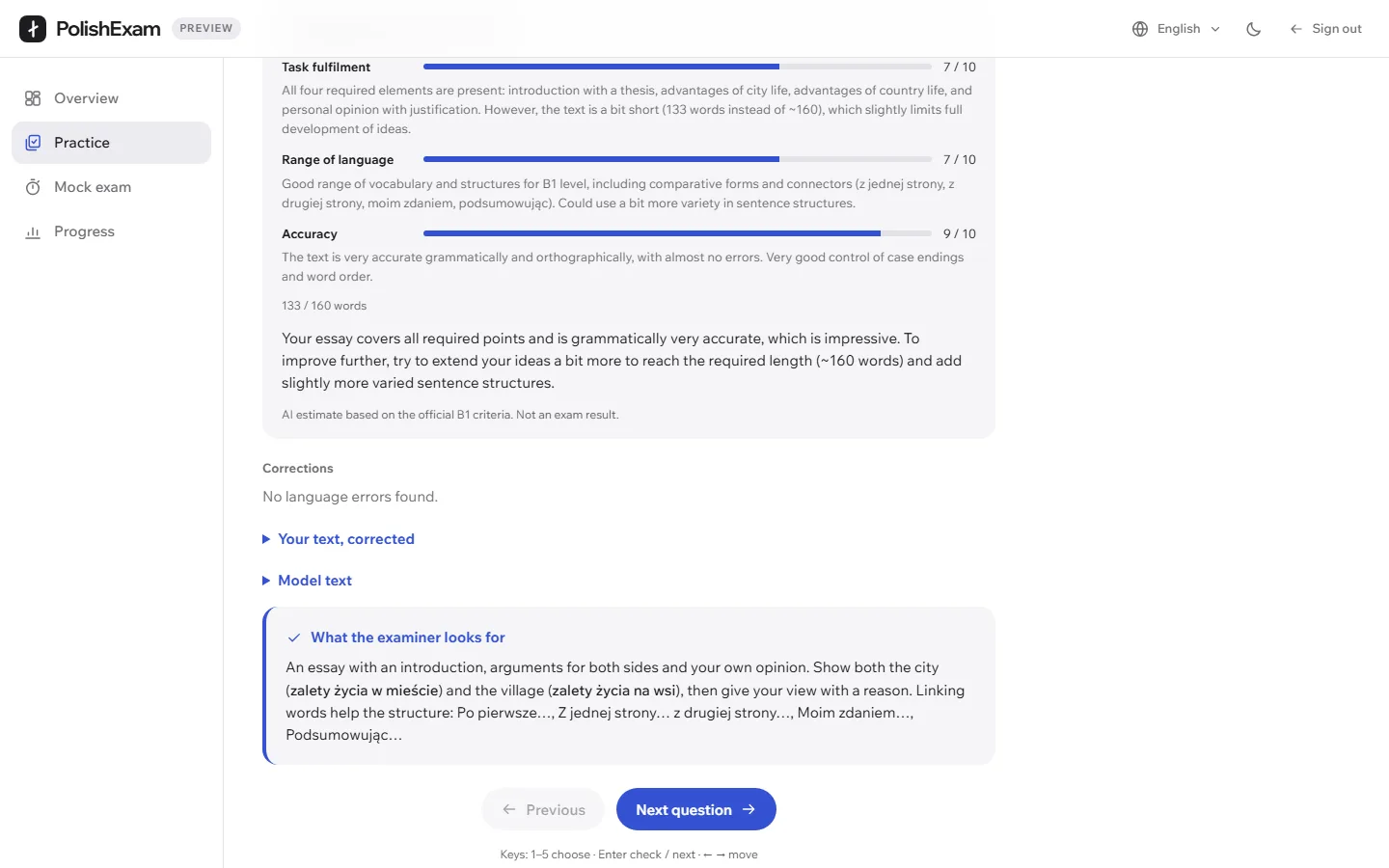
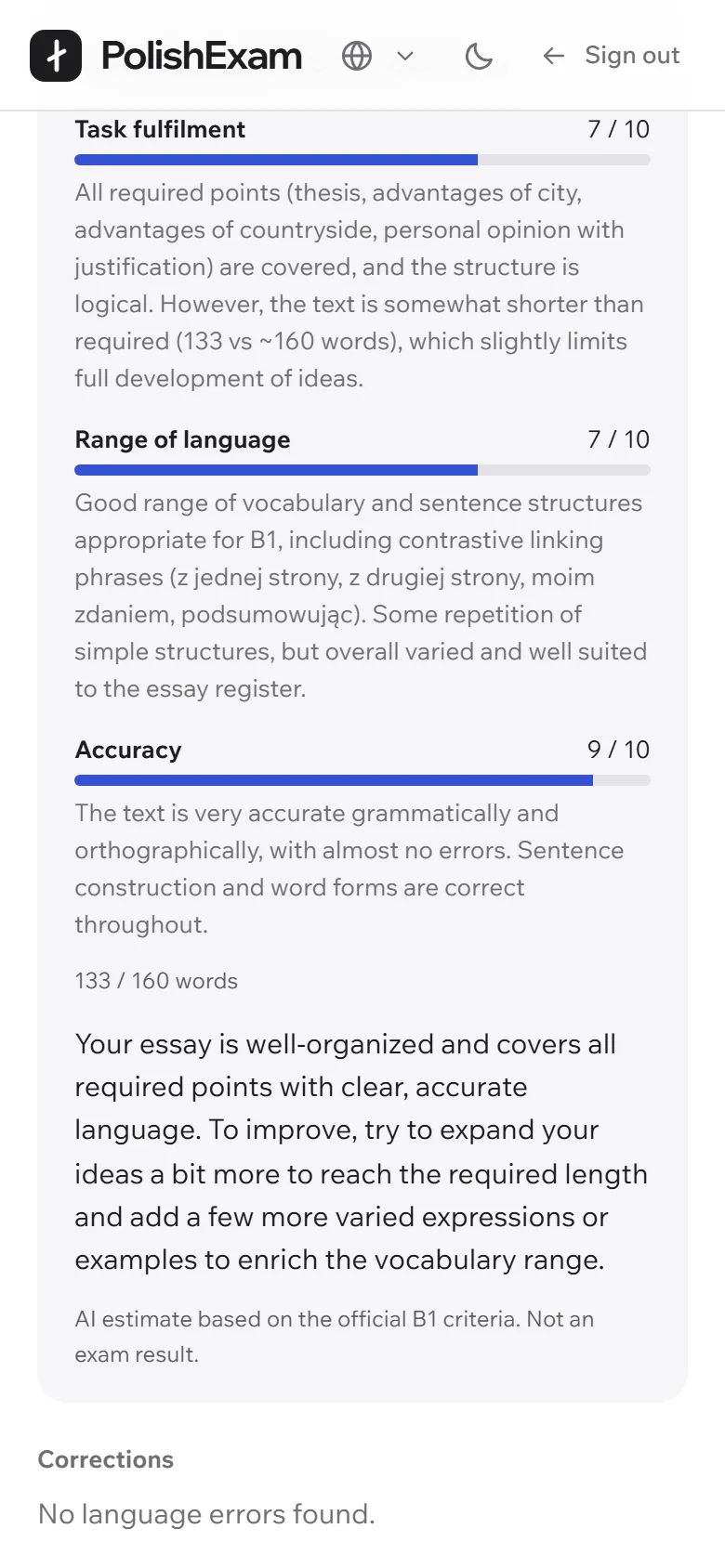
Writing checked against the official criteria
Write a letter or an announcement and get AI feedback on task fulfilment, range and accuracy – an estimate, not an official score.
Frequently asked questions
Do I need a Polish certificate to get the CUKR card?
No. Art. 42c–42x of the Act on assistance to citizens of Ukraine set no language condition. The conditions concern your UKR status: held on 4 June 2025, on the day of the application, and for at least 365 days without a break.
Does the time on the CUKR card count towards the EU long-term resident permit?
Yes. The Office for Foreigners states that the stay on the CUKR card counts towards the required period. According to the Pomeranian Voivodeship Office the period starts on the day you collect the card.
Do the years with UKR status count towards the five years?
According to the voivodeship offices, no: the time in Poland with UKR status is not counted towards the period for the EU resident permit. Ask the office handling your case if you also held other residence permits.
What happens when the CUKR card expires after three years?
The card is valid for three years (art. 42p). To stay you need another temporary residence permit granted on general rules. For the EU resident permit the stay has to be legal and uninterrupted for five years.
What level of Polish does the EU long-term resident permit require?
Confirmed Polish at least at B1 (art. 211(1)(3) of the Act on Foreigners), shown with an accepted certificate or a school document. See the EU resident page for the list.
Until when can I apply for the CUKR card?
Art. 42x covers applications made by 4 March 2027. If you apply by then, your stay is treated as legal until you collect the card or the decision becomes final.
Sources
- Act on assistance to citizens of Ukraine, consolidated text Dz.U. 2026 item 1293 – art. 42c–42x: the CUKR residence card
- Announcement of the Minister of the Interior and Administration of 10 April 2026, M.P. 2026 item 371 – applications possible from 4 May 2026
- Act on Foreigners, consolidated text Dz.U. 2025 item 1079 – art. 211 (5 years, B1), art. 212 (which periods count), art. 213 (when proceedings are not started)
- Office for Foreigners (UdSC) – residence cards for citizens of Ukraine with a PESEL UKR – published 21.11.2025: the CUKR period counts towards the EU resident permit
- Pomeranian Voivodeship Office – CUKR residence card, questions and answers – the period runs from the day you collect the card; the UKR-status period is not counted
- Act on Polish Citizenship, consolidated text Dz.U. 2025 item 1611 – art. 30: recognition as a citizen, B1
On a CUKR card and planning to stay?
The permit that makes your stay permanent needs B1 in every part of the exam. Find out where you stand now.